 Illinois workers’ compensation lawyers know that on-the-job safety can be largely dependent on company culture. A firm that prioritizes worker safety is going to have fewer workplace injuries, and that holds true even for some of the most dangerous industries. That’s because most worker injuries are preventable, if employers take the time to properly train, equip and supervise workers.
But a new study finds that if companies are more focused on their bottom line and meeting earning quotas, workplace safety falls by the wayside, resulting in more reported injuries and workers’ compensation claims. Increasingly, companies throughout the U.S. are under intense pressure to meet stringent earnings expectations and quotas.
The study was published recently in the Journal of Accounting and Economics. It finds a causal correlation between high earning pressure and workplace injuries. The authors analyzed injury data from 870 companies, as provided to the U.S. Occupational Safety and Health Administration (OHSA) between 2002 and 2011. In all, there were 35,400 reports analyzed. What they found was that when companies met or just barely exceeded the financial expectations of their sector, their injury rate was 1 in 23. Meanwhile, companies that missed that substantially missed that mark – either falling short or exceeding it comfortably – had an injury rate of 1 in 27.



 In late September of this year, OSHA began enforcing a new rule on respirable crystalline silica, a common material produced by industrial activities involving stone, glass, brick, and other materials. This is actually the first part of a two-step rule being rolled out, and only impacts construction industries; general industrial and maritime rules will begin enforcement June 23, 2018. The rule is aimed at reducing exposure to the airborne silica, thereby reducing cases of multiple diseases associated with its intake.
 Anybody who has ever worked a job where they spend most of the day on their feet is well-aware of the physical toll it can take.
 A new study by
  Work-related injuries in Illinois are compensable to employees under two conditions:
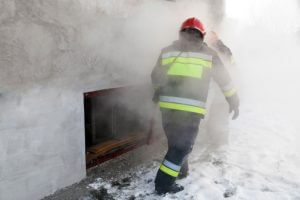 A number of legislative efforts over the last year have focused on making it simply for first responders grappling with PTSD to obtain workers’ compensation benefits.
 Hip implants are an unfortunate necessity for many Americans. They provide the mobility that may have been lost due to age, illness, or injury and restore quality of life that had previously been compromised. However, they don’t always live up to standards; implants and their accompanying mechanisms can fail, become misaligned, and succumb to numerous other malfunctions.
 If you get hurt on-the-job and you are an independent contractor, you need to determine if you are covered by
  With the
  In an effort to make America’s roads safer and provide accurate information after an accident, commercial truck drivers will soon be required to install electronic logging devices which keep track of their speed, hours of service and other critical information.